

Birthright Citizenship in the U.S.: What It Is and Who Qualifies
.svg)
{{tip-1}}
What Is Birthright Citizenship?
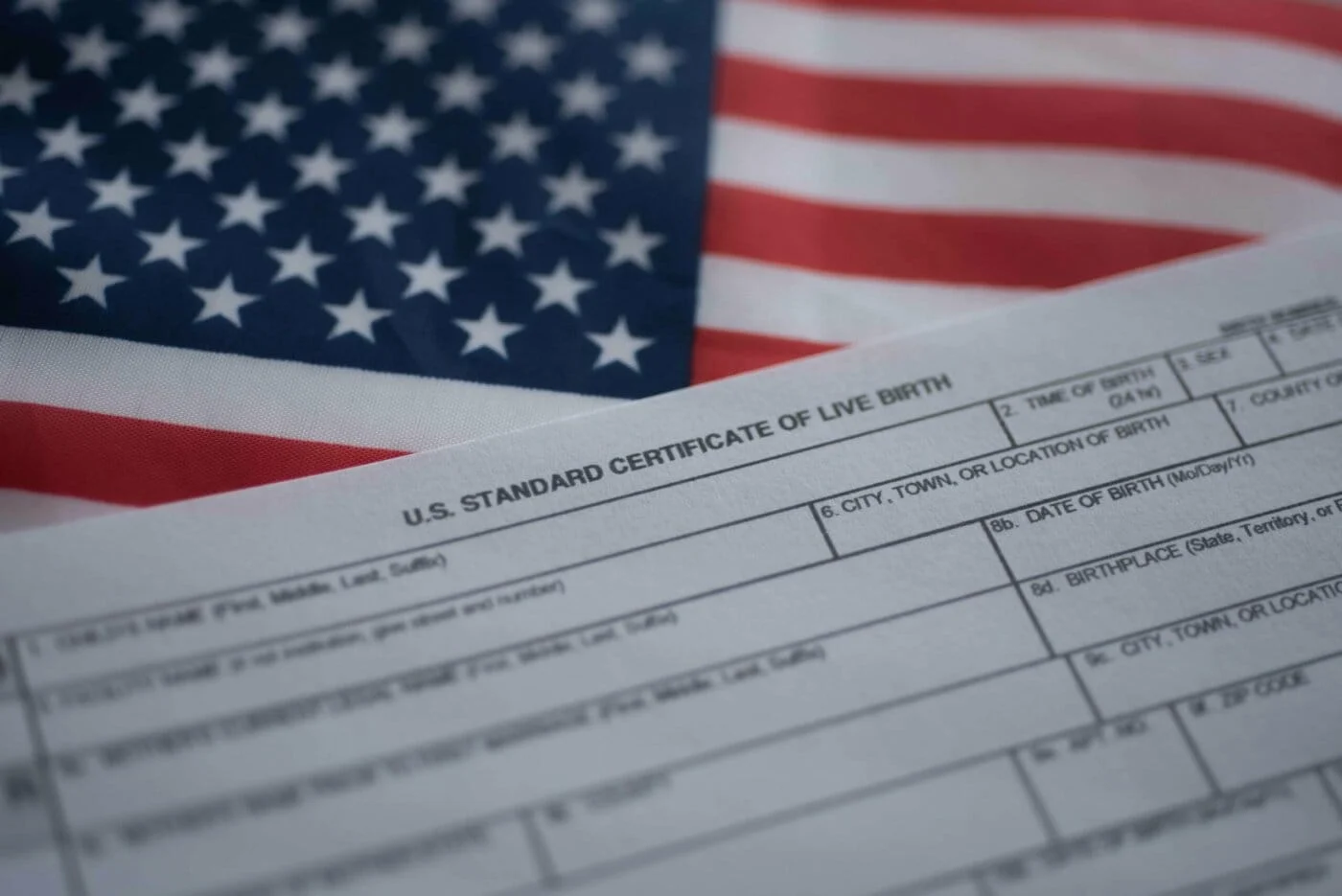
In the United States, birthright citizenship means nearly anyone born on U.S. soil automatically becomes a U.S. citizen, regardless of their parents' immigration status. This principle, rooted in the 14th Amendment, has been part of U.S. law for more than 150 years.
In 2025, President Donald Trump signed an executive order seeking to limit birthright citizenship for some children born in the United States. In June 2026, however, the U.S. Supreme Court struck down the order, leaving current birthright citizenship rules unchanged.
This guide explains how birthright citizenship works, who qualifies, the limited exceptions, and what the Supreme Court's decision means.
{{cta-component-center-aligned}}
Why Birthright Citizenship Exists in the U.S.
Birthright citizenship in the U.S. is enshrined in the 14th Amendment to the Constitution, which was ratified in 1868. The specific language that guarantees this right is found in the amendment’s Citizenship Clause, which states:
“All persons born or naturalized in the United States, and subject to the jurisdiction thereof, are citizens of the United States and of the state wherein they reside.”
This clause was introduced as part of the broader effort to address the legal status of formerly enslaved individuals following the Civil War. Here’s why the U.S. adopted citizenship by birth in the United States and how it fits into the country’s legal framework:
- Post-Civil War Legal Reform and the 14th Amendment: The 14th Amendment was designed to grant citizenship to newly freed Black Americans, particularly the children of formerly enslaved people. It aimed to secure citizenship for all U.S.-born individuals, regardless of their parents’ status, responding to past discriminatory practices that denied Black Americans citizenship rights.
- Preventing Statelessness: Birthright citizenship ensures that children born in the U.S. automatically have nationality, preventing them from becoming stateless — without a country willing to claim them.
- International Practice: While birthright citizenship is rare globally, the U.S. continues to uphold this right, consistent with international human rights principles that protect individuals’ rights, regardless of their parents’ immigration status.
- Legal Precedent and Tradition: U.S. courts have upheld birthright citizenship for over 150 years, with the Supreme Court’s ruling in United States v. Wong Kim Ark (1898) confirming that children born to foreign nationals on U.S. soil are U.S. citizens.
Birthright citizenship has long been the subject of political debate, particularly over whether children born to undocumented immigrants should automatically become U.S. citizens. Supporters of changing the policy argue that the 14th Amendment should not apply to children whose parents are in the United States unlawfully or temporarily. Opponents point to the amendment's text and more than a century of Supreme Court precedent recognizing birthright citizenship for nearly everyone born in the United States. In 2026, the Supreme Court reaffirmed that longstanding interpretation, leaving current birthright citizenship rules in place.
Which Countries Offer Birthright Citizenship?
Many countries around the world practice birthright citizenship, though the rules and conditions vary. Some countries follow the principle of jus soli (right of the soil), where anyone born within the country’s territory is granted citizenship. Here are some examples:
- Canada: Similar to the U.S., Canada offers birthright citizenship through jus soli, meaning any child born on Canadian soil is granted Canadian citizenship.
- Argentina, Brazil, and Mexico: These countries also follow jus soli and offer automatic citizenship to children born within their borders.
- United Kingdom: The UK used to practice birthright citizenship, but changes in the law have restricted it, especially for children of non-citizen parents.
However, many other countries follow the principle of jus sanguinis (right of blood), which grants citizenship based on the nationality of the parents, not the place of birth. Countries like Japan, Germany, and China primarily use jus sanguinis, meaning a child’s citizenship is determined by the nationality of their parents.
Trump’s Executive Order to End Birthright Citizenship
On January 20, 2025, President Donald Trump signed an executive order seeking to restrict birthright citizenship. The order would have denied U.S. citizenship to some children born in the United States unless at least one parent was a U.S. citizen or lawful permanent resident.
The proposal would have applied to some children born to undocumented immigrants as well as certain parents lawfully present on temporary visas.
However, Trump's executive order was immediately challenged in multiple federal courts, with judges blocking it from taking effect. Plaintiffs argued that the order violated the Citizenship Clause of the 14th Amendment, which has long been understood to grant U.S. citizenship to nearly everyone born in the United States, with limited exceptions such as children of foreign diplomats.
On June 30, 2026, the U.S. Supreme Court struck down the executive order in a 6-3 decision, holding that the longstanding interpretation of the 14th Amendment protects birthright citizenship for children born in the United States, regardless of whether their parents are in the country legally or temporarily. As a result, there is no change to current birthright citizenship rules, and children born in the United States continue to acquire U.S. citizenship at birth under the Constitution.
The majority opinion, written by Chief Justice John Roberts, relied on the text and history of the 14th Amendment, as well as more than a century of Supreme Court precedent. Justice Brett Kavanaugh agreed that the executive order was invalid under federal law, although he disagreed that the Constitution itself required birthright citizenship in every case. Three justices dissented.
Related Information

.svg)
Important Update (July 2026): On June 30, 2026, the U.S. Supreme Court struck down President Trump's executive order that sought to limit birthright citizenship for certain children born in the United States. The Court held that children born in the U.S. remain U.S. citizens under the longstanding interpretation of the 14th Amendment, with only limited exceptions. As a result, there is no change to current birthright citizenship rules, and children born in the United States continue to acquire U.S. citizenship at birth regardless of their parents' immigration status in most cases.
.svg)
Important Update (July 2026): On June 30, 2026, the U.S. Supreme Court struck down President Trump's executive order that sought to limit birthright citizenship for certain children born in the United States. The Court held that children born in the U.S. remain U.S. citizens under the longstanding interpretation of the 14th Amendment, with only limited exceptions. As a result, there is no change to current birthright citizenship rules, and children born in the United States continue to acquire U.S. citizenship at birth regardless of their parents' immigration status in most cases.
Important Update (July 2026): On June 30, 2026, the U.S. Supreme Court struck down President Trump's executive order that sought to limit birthright citizenship for certain children born in the United States. The Court held that children born in the U.S. remain U.S. citizens under the longstanding interpretation of the 14th Amendment, with only limited exceptions. As a result, there is no change to current birthright citizenship rules, and children born in the United States continue to acquire U.S. citizenship at birth regardless of their parents' immigration status in most cases.
Unsure about which immigration path is best for you?
Answer a few simple questions to get started.
Unsure about which immigration path is best for you?
Answer a few simple questions to get started.
Birthright Citizenship FAQs
Once U.S. citizenship through birthright is granted, it cannot typically be revoked unless it was obtained fraudulently. U.S. citizenship through birthright is a fundamental right and cannot be undone without a significant legal process.
No. The 14th Amendment excludes individuals born to foreign diplomats and officials who are not subject to U.S. jurisdiction. Such children are not granted U.S. citizenship.
Yes, as long as you are born within the United States or its territories, you are automatically granted U.S. citizenship, regardless of your parents’ immigration status.
You will still receive U.S. citizenship at birth. Temporary work visas or other short-term statuses do not impact birthright citizenship.
Possibly — but it would likely require a constitutional amendment or a major reinterpretation by the U.S. Supreme Court. Either path would be legally complex and politically difficult.






.svg)
.avif)