

.svg)
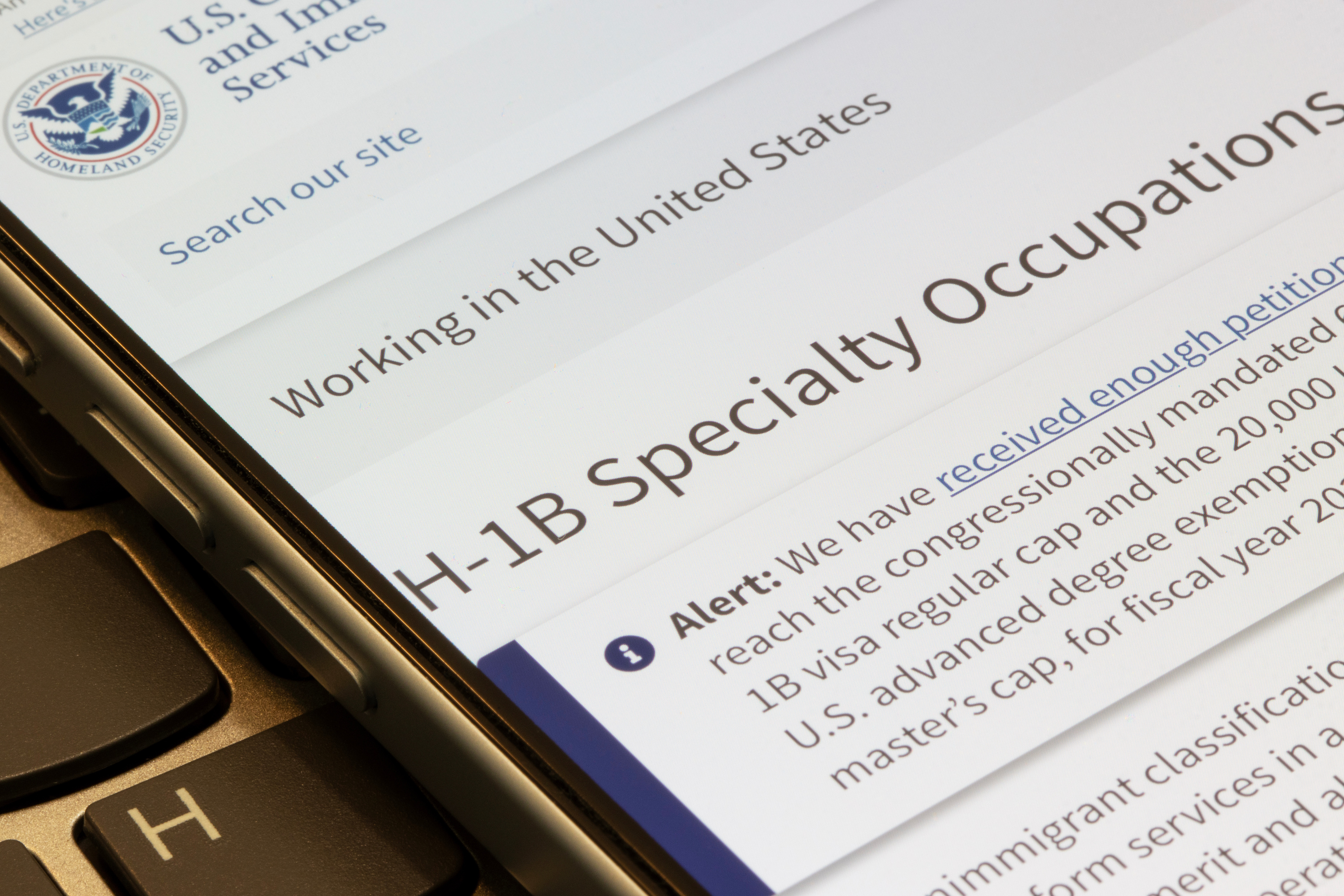
A second federal court has blocked the Trump administration’s $100,000 fee on certain new H-1B petitions, adding another legal setback to a policy that has been tied up in litigation for months.
On Sept. 30, U.S. District Judge Haywood S. Gilliam Jr. of the Northern District of California ruled that U.S. Citizenship and Immigration Services (USCIS) and the State Department failed to follow required rulemaking procedures when implementing the fee. The court granted a preliminary injunction blocking the agencies from enforcing it.
The ruling comes after a federal judge in Massachusetts struck down the fee in June. In July, the U.S. Court of Appeals for the First Circuit declined to pause that ruling while the government appeals.
For employers, the practical takeaway is that the $100,000 fee remains blocked for now. But the litigation is not over, and questions remain about petitions caught up in the policy and whether employers that already paid the fee will receive refunds.
Not sure how the changing H-1B rules affect your hiring plans? Boundless helps employers and professionals navigate H-1B visas and other employment-based immigration pathways. Learn more about your options.
What Is the $100,000 H-1B Fee?
The fee was introduced through a presidential proclamation in September 2025 as part of a broader effort to restrict immigration and prioritize U.S. workers.
Under the policy, employers filing certain new H-1B petitions were required to pay an additional $100,000 fee on top of existing filing costs, which already run into the thousands of dollars.
The administration argued that the measure would discourage employers from hiring foreign workers when qualified U.S. workers were available.
Critics said the fee would make it significantly harder for employers, universities, hospitals, and public agencies to hire highly skilled workers through the H-1B program.
The policy led to lawsuits from states, business groups, labor organizations, and others who argued that the fee exceeded the administration's authority and would disrupt industries that rely on highly skilled talent.
The original proclamation was scheduled to expire in September 2026, but President Trump extended the policy for another year on Sept. 18, through September 2027.
Why Courts Have Blocked the Fee
The $100,000 fee has now been blocked in two separate federal cases, although the courts reached their decisions on different grounds.
In June, U.S. District Judge Leo Sorokin of the District of Massachusetts sided with a coalition of 20 states challenging the policy. The court found that the administration lacked authority to impose the requirement and vacated the policy nationwide.
The administration asked the First Circuit Court of Appeals to pause that ruling while its appeal proceeded, but the court denied the request in July.
Then, on Sept. 30, Judge Gilliam ruled in a separate California case brought by a coalition of unions, employers and nonprofits. Gilliam found that USCIS and the State Department had failed to follow required rulemaking procedures before implementing the $100,000 payment requirement and issued a preliminary injunction blocking enforcement.
Together, the decisions mean the fee remains blocked even after the administration's recent attempt to extend the policy for another year.
Why the Legal Fight Isn't Over
The latest ruling does not end the litigation surrounding the fee.
The government is continuing to defend the policy in federal appeals courts. Meanwhile, the U.S. Chamber of Commerce is pursuing a separate challenge after a federal district court in Washington, D.C. rejected its claims against the fee.
There is also a separate regulatory effort underway. The Department of Homeland Security has proposed establishing a fee of roughly $103,000 through the formal rulemaking process. If finalized, that policy would raise different legal questions from the presidential proclamation currently being challenged in court.
The Northern District of California has scheduled a case management conference for Oct. 27.
What It Means for Employers
For now, employers should not be required to pay the $100,000 fee covered by the court rulings. But the picture is more complicated for petitions filed while the policy was in effect.
Some employers paid the $100,000 fee and had their petitions adjudicated. Whether those payments will ultimately be refunded remains unresolved. Other petitions that were identified as subject to the fee but challenged that requirement remain pending at USCIS.
Employers with affected petitions should review where each case stands and stay in close contact with immigration counsel as the appeals proceed.
Boundless will continue monitoring the litigation and provide updates as new details emerge.
{{cta-component-horizontal-aligned}}
.svg)
A Massachusetts federal court has temporarily paused its June 8 order vacating the Trump administration's $100,000 H-1B fee. As a result, U.S. Citizenship and Immigration Services (USCIS) may continue requiring the fee while the government seeks further review. The court gave the administration until June 18 to request a longer stay from the appeals court. The fee's status could change quickly as litigation continues.
.png)
Need help navigating H-1B changes?
Immigration policy can change quickly, and court rulings can create uncertainty for employers and foreign workers alike. Boundless helps companies and professionals understand how policy changes affect their immigration options and next steps.
Need help navigating H-1B changes?
Immigration policy can change quickly, and court rulings can create uncertainty for employers and foreign workers alike. Boundless helps companies and professionals understand how policy changes affect their immigration options and next steps.

.png)



.svg)
.avif)