

H-1B Employee Documents: Beneficiary Checklist

.svg)
Getting an H-1B petition right usually depends on a shorter list of beneficiary documents than most people expect: passport ID pages, immigration records, degree evidence, and work history that actually matches the job. This guide covers the employee documents employers and beneficiaries typically need in 2026, how those documents are used, and where missing or inconsistent records tend to trigger delays or requests for evidence.
For a broader overview of the H-1B category, see Boundless's H-1B pillar guide. If you need the full filing package rather than the beneficiary-only subset, see what documents you need for an H-1B visa.
Questions about what your H-1B file needs to include? Speak with a Boundless immigration attorney before you file.
{{tip-1}}
What Are H-1B Employee Documents?
H-1B employee documents typically include a passport, prior U.S. immigration records, degree certificates and transcripts, a resume, and letters showing relevant work experience. The petitioner must submit evidence for the classification requested, and the beneficiary's records are a significant part of that proof.
In practical terms, these documents do three things: confirm the worker's identity, establish current status or travel history, and prove the worker is qualified for the specialty occupation. Whether a case is cap-subject or cap-exempt can affect timing and filing strategy — for that distinction, see H-1B cap-subject vs. cap-exempt.
Core H-1B Employee Documents Checklist
Most H-1B beneficiary files follow the same basic checklist, even when the employer-side evidence looks different. The petition must show that the beneficiary is qualified to perform services in a specialty occupation.
- Passport biographic page and any prior U.S. visa pages.
- Current and prior immigration documents, including Forms I-94, I-20, DS-2019, I-797, EAD, or prior approval notices, if applicable.
- Degree certificates and complete transcripts for all relevant postsecondary study.
- Credential evaluation for foreign degrees when U.S. equivalency is not already documented.
- Updated resume with exact month-and-year employment dates.
- Experience letters that describe duties, dates, and full-time or part-time status.
- Cross-check all records to confirm names, dates of birth, and employment timelines are consistent.
For the full step-by-step path from registration through petition filing, see how the H-1B visa process works. For overall timelines, see how long the H-1B visa process takes.
Passport and Identity Records
The beneficiary's passport is the primary identity document in an H-1B filing. Passport information is used throughout the visa and travel process, and that identifying data needs to match the petition record.
HR teams typically request:
- Passport biographic page
- Any U.S. visa stamps, including prior F-1, J-1, B-1/B-2, or prior H-1B visas
- Passport expiration details for filing and travel planning
- Legal name change records, if the passport name differs from academic or employment records
One of the most common problems is inconsistent spelling across the passport, diploma, and prior immigration records. That does not always stop a filing, but it often creates additional explanation work. The same mismatch can follow the worker into the visa stamping stage if they apply abroad after approval.
Immigration History and Current Status Documents
Current-status evidence helps determine whether the filing requests a change of status inside the United States or consular processing abroad. The electronic Form I-94 is the official arrival and departure record used to document admission details.
For beneficiaries already in the United States, the standard file includes:
- Most recent Form I-94
- Prior Form I-797 approval notices
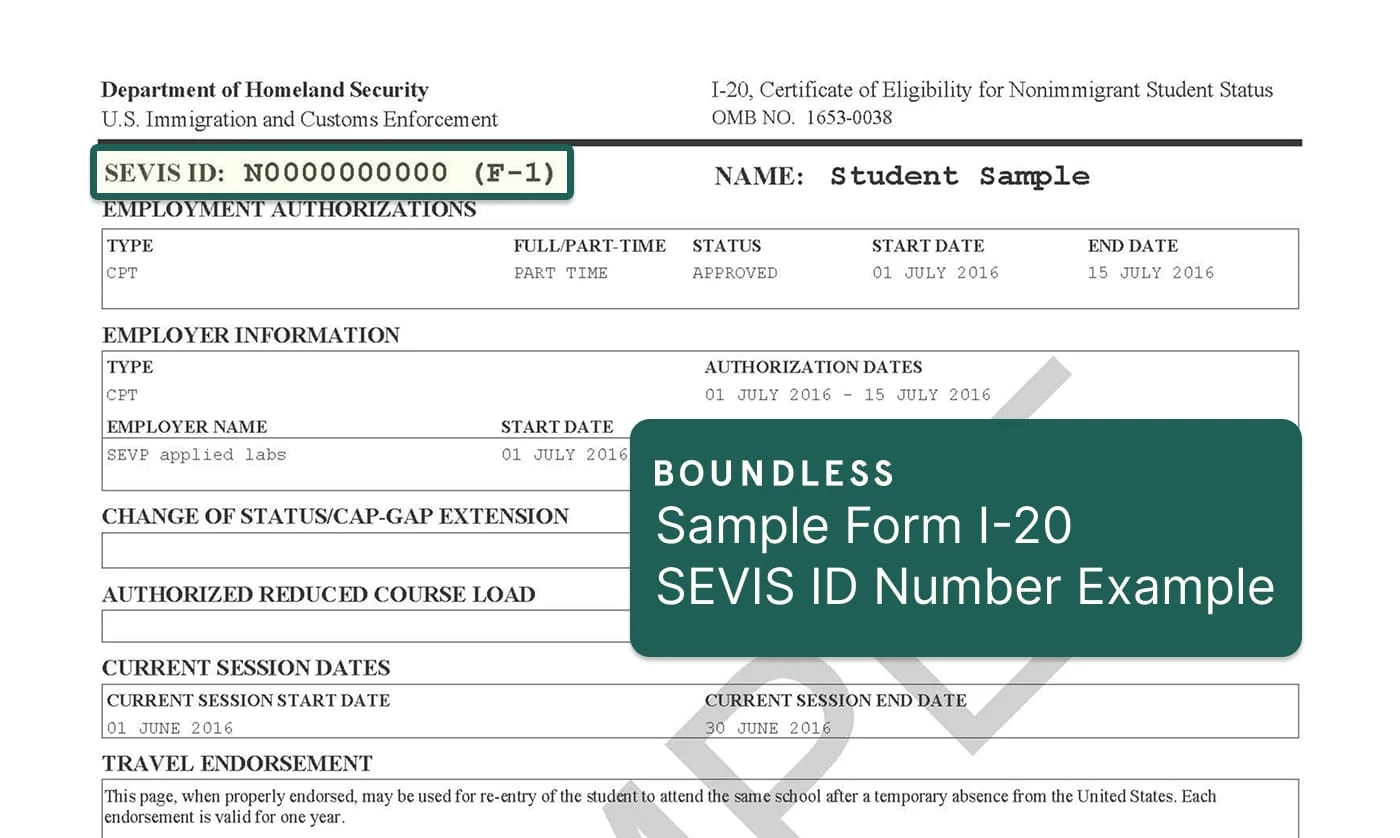
- Form I-20 records for F-1 students
- Form DS-2019 records for J-1 exchange visitors
- Employment Authorization Document, if one was issued
- Copies of prior petition approval notices or change-of-status approvals
USCIS looks at whether the beneficiary maintained status through the filing date, so gaps matter. An expired I-94, unauthorized employment, or a mismatch between SEVIS records and actual employment dates can complicate the case. For a full comparison of filing paths, see H-1B change of status vs. consular processing.
Degree Certificates, Transcripts, and Credential Evaluations
Educational records are typically the core evidence that the beneficiary qualifies for the offered specialty occupation. An H-1B beneficiary must meet the degree, license, or equivalent experience requirements for the occupation.
The standard education packet includes:
- Degree certificate or diploma
- Official or unofficial transcripts showing courses and award date
- Credential evaluation for foreign degrees
- Professional license, if the occupation requires one
Equivalency evidence can include education, specialized training, and progressively responsible experience, depending on the case. A bachelor's degree in computer science generally creates less risk for a software role than a business degree paired with technical work experience. For a closer look at this issue, see H-1B degree requirements.
Foreign Degree Edge Cases
Foreign credentials often require more than a diploma scan. The record must show that the beneficiary holds the equivalent of the required U.S. degree. A few recurring situations deserve extra attention:
- A three-year bachelor's degree may require a formal equivalency opinion, depending on the country, field, and evaluator's methodology.
- A degree title that does not clearly connect to the offered role may require transcript analysis and a detailed duties breakdown.
- Missing final diplomas for recent graduates may require provisional certificates, transcripts showing conferral, or university letters.
Resume and Experience Letters
Resumes and experience letters help connect the beneficiary's background to the offered role, particularly when the degree field and job duties are not a close match. Supporting evidence should be organized and strong enough to establish eligibility at the time of filing.
A useful resume includes exact employer names, work locations, titles, and month-year date ranges. Experience letters are stronger when they include:
- Company letterhead and signature
- Exact employment dates
- Job title
- Hours worked per week
- Detailed duties and technologies or methods used
Generic letters stating only that someone worked from 2021 to 2024 are usually weak evidence. Cases that rely partly on experience equivalency are more likely to draw an RFE if letters are vague, missing, or inconsistent with the resume.
How HR Teams Should Collect H-1B Employee Documents
Document collection works best with a standard intake list, clear file-naming conventions, and one review round before legal drafting begins. Missing or inconsistent evidence can slow adjudication because USCIS decides the case based on the record submitted.
The simplest approach is to request everything at once, then resolve missing pieces before the petition window gets tight. Timing matters most in cap-subject cases, where selection and filing deadlines are fixed. For context, see H-1B lottery chances, H-1B premium processing time, and how much an H-1B visa costs.
Common Document Gaps That Lead to Delays or RFEs
Most beneficiary-side evidence problems are avoidable. Trouble usually comes from inconsistencies rather than a dramatic lack of paperwork. USCIS requires eligibility to be established at the time of filing, so a later explanation may not fully repair a weak initial record. Common gaps include:
- Passport expiring soon after filing, creating later travel or visa stamping issues
- No final degree certificate, with no registrar letter or transcript showing conferral
- Foreign degree submitted without translation or evaluation
- Resume dates that do not match experience letters
- I-94 or prior approval notice omitted in a change-of-status filing
- Name differences across passport, diploma, and payroll records with no explanation
These issues do not guarantee a denial, but they often generate extra follow-up. If the worker is already in H-1B status and changing employers, document needs may overlap with the H-1B transfer process. If the role or location later changes, the record may also connect to H-1B amendment requirements or the H-1B extension process.
Which Employee Documents Matter Most by Scenario
The most important beneficiary documents depend on the posture of the case. The strongest filings identify which evidence carries the real legal issue and build the employee packet around it.
A software engineer with a straightforward U.S. computer science degree generally does not need the same depth of qualifications evidence as a product analyst with a mixed education and experience profile.
{{cta-component-horizontal-aligned}}
Related Info

.svg)
Key Takeaways
- An H-1B filing typically includes five evidence categories: employer records, employee identity and immigration documents, degree evidence, job-specific proof, and required USCIS and Department of Labor forms.
- The Labor Condition Application must be certified by the Department of Labor before the employer files the H-1B petition with USCIS.
- Degree evidence should align with the job requirements in the support letter and LCA. When the field of study and job duties do not match, USCIS takes a closer look.
- A complete packet should include prior immigration documents, pay records where relevant, and certified translations for any foreign-language records.
- Many requests for evidence come from inconsistent documents, not a single missing form. Job title, worksite, wage, and education mismatches are the most common trouble spots.
.svg)
Key Takeaways
- An H-1B filing typically includes five evidence categories: employer records, employee identity and immigration documents, degree evidence, job-specific proof, and required USCIS and Department of Labor forms.
- The Labor Condition Application must be certified by the Department of Labor before the employer files the H-1B petition with USCIS.
- Degree evidence should align with the job requirements in the support letter and LCA. When the field of study and job duties do not match, USCIS takes a closer look.
- A complete packet should include prior immigration documents, pay records where relevant, and certified translations for any foreign-language records.
- Many requests for evidence come from inconsistent documents, not a single missing form. Job title, worksite, wage, and education mismatches are the most common trouble spots.
Key Takeaways
- An H-1B filing typically includes five evidence categories: employer records, employee identity and immigration documents, degree evidence, job-specific proof, and required USCIS and Department of Labor forms.
- The Labor Condition Application must be certified by the Department of Labor before the employer files the H-1B petition with USCIS.
- Degree evidence should align with the job requirements in the support letter and LCA. When the field of study and job duties do not match, USCIS takes a closer look.
- A complete packet should include prior immigration documents, pay records where relevant, and certified translations for any foreign-language records.
- Many requests for evidence come from inconsistent documents, not a single missing form. Job title, worksite, wage, and education mismatches are the most common trouble spots.
A gap in the beneficiary record can slow down an otherwise strong petition.
A Boundless immigration attorney can review the file before it goes to USCIS.
A gap in the beneficiary record can slow down an otherwise strong petition.
A Boundless immigration attorney can review the file before it goes to USCIS.
FAQs
Most H-1B employee documents include the beneficiary's passport biographic page, current and prior U.S. immigration records, degree certificate, transcripts, resume, and relevant experience letters. The exact list depends on the case posture, including whether it involves change of status, consular processing, prior H-1B history, or foreign education.
USCIS filings generally use copies, but they need to be clear and complete. Employers or counsel may still want to inspect originals, particularly when a diploma is difficult to read, the degree field is unclear, or the case depends on a foreign credential evaluation.
Name differences are common after marriage, transliteration changes, or local naming conventions. The file should generally include supporting records such as a marriage certificate, legal name change document, or a brief explanation showing that the records belong to the same person.
Yes. A beneficiary already in the United States typically needs current-status evidence such as Form I-94, prior Form I-797 notices, and school or work authorization records where applicable. A beneficiary applying through consular processing may rely more heavily on passport, education, and work-history records until the visa interview stage.
Yes. The USCIS petition record is federal, but post-approval visa stamping practices can vary by U.S. embassy or consulate, including appointment availability and document presentation preferences. Beneficiaries applying abroad should review the specific consulate's instructions before scheduling an interview.







.svg)
.avif)