


.svg)
{{tip-component-4}}
U.S. Citizenship and Immigration Services (USCIS) has issued new guidance that could make it harder for some employees to complete the green card process from inside the United States.
In a May 21, 2026 policy memo, the agency said it would grant adjustment of status (AOS) "only in extraordinary circumstances," raising immediate questions for employers, in-house counsel, and immigration teams nationwide.
The memo, PM-602-0199, titled "Adjustment of Status is a Matter of Discretion and Administrative Grace, and an Extraordinary Relief that Permits Applicants to Dispense with the Ordinary Consular Visa Process," is significant. AOS filings, one of the steps required in pursuit of a green card, play an important role in long term talent retention within corporate immigration programs.
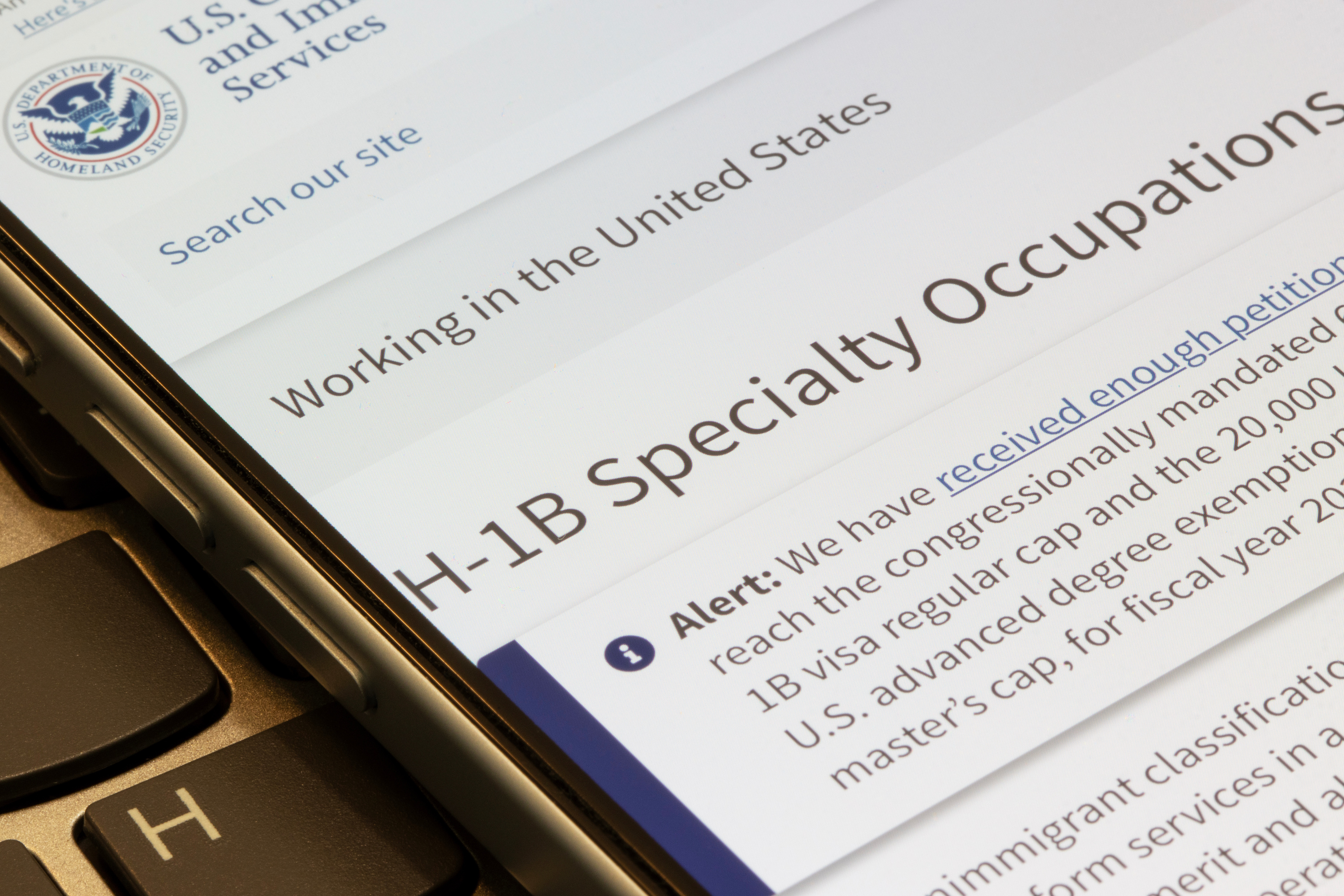
What the practical implementation of such a change would look like and whether H-1B status holders would actually be impacted is still unknown. H-1B holders have traditionally been allowed to pursue permanent resident green card status from within the U.S. without issue under current immigrant rules.
Whether and how this memo affects your employees depends largely on further USCIS guidance and litigation, which is expected. An employee's immigration status may also play an important role in determining whether they are permitted to apply for AOS from within the U.S. as opposed to having to travel abroad for consular processing.
Here is what we know right now, and what employers should be doing about it. We will update this page as new information becomes available. Bookmark it to stay current. This information is not intended as legal advice.
Not sure whether to file or wait? Talk to a Boundless immigration expert to assess your employees’ risk. Learn more.
What Is Adjustment of Status, and Why Does It Matter for Employers?
Adjustment of status (AOS) is the final stage of the U.S. green card process for foreign nationals already inside the United States.
Rather than leaving the country to complete an immigrant visa interview at a U.S. consulate abroad, eligible employees can file for permanent residence domestically. For employers, AOS is a critical tool: it allows valued employees to complete the green card process without the disruption and risk of international travel and consular processing. The immigration regulations also clearly understand this need and identify clear dual intent status types allowing certain nonimmigrant status holders to apply for permanent residency through AOS without having to consular process and without it impacting their existing status. Other areas of immigration law also recognize adjustment of status as a necessary tool.
This memo does not introduce new law. Rather, it takes the opportunity to reinforce the idea that AOS has always been discretionary, and then instructs officers to weigh all relevant factors more carefully when adjudicating applications. What makes it significant for corporate immigration is its emphasis on the government's preference that immigrants go through the standard consular process abroad, and its signaling that those who seek to bypass that process will face greater scrutiny and will have to show some compelling reason to do so.
A Central Question: Will Dual Intent vs. Non-Dual Intent Status Determine Who Is Affected?
The practical impact of this memo on any given employee may come down to one key distinction: wwhether an employee’s current visa category allows dual intent.
Dual intent means a visa holder is legally permitted to simultaneously hold a temporary nonimmigrant status and pursue permanent residence in the United States. H-1B and L-1 visa holders are allowed to have dual intent under U.S. immigration law. They entered the U.S. in a category that Congress specifically designed to allow pursuit of a green card, meaning their AOS filing does not appear to contradict the purpose of their admission in the way the memo describes.
These employees are in the strongest position to argue against consular processing, since U.S. immigration rules already allow them to pursue a green card from within the country. These individuals are also able to show they are making clear positive contributions in working in professional level roles for U.S. companies, and the tremendously negative impact on U.S. employers and individual families should they be forced to leave the U.S. to purse residency from abroad, often with no clear timelines for re-entry, possible administrative delays, and limited ability to challenge a decision made at a U.S. consulate.
{{tip-component-3}}
Non-dual intent visa categories may end up being more directly targeted. Holders of TN, E-3, F-1 OPT, and J-1 visas entered the United States on the express or implied understanding that they would depart when their authorized period ended. The memo appears to target this group in particular, citing Congress's intent that nonimmigrants should depart rather than pursue permanent residence from inside the country.
Our corporate team's current guidance is that those employees in non-dual intent categories should consider waiting to file AOS applications until this memo has been further clarified and possibly litigated. Keep in mind that each situation is unique, but if rush filings are not required, it is likely best to wait and see how this guidance is applied in practice
O-1 visa holders occupy a genuinely uncertain middle ground. O-1 is not explicitly designated as dual intent under the statute, and while it has not historically posed issues for AOS filings, it is unclear how the memo may be applied to this category going forward. O-1 holders should consult with counsel before proceeding with an AOS application in the current environment.
What USCIS Officers Are Looking For: The Factors That Matter
Based on guidance from immigration attorneys who have reviewed the memo and are already seeing it applied in the field, USCIS officers are being instructed to weigh a specific set of factors when deciding whether to approve an adjustment of status application, and it is important that employers and employees understand both sides of that analysis.
Factors that may count against an applicant include:
- Violations of immigration law or the conditions of a prior visa status
- Fraud or false statements made to USCIS or any government agency
- Behavior that was inconsistent with the purpose of the visa status held
- Remaining in the U.S. after an authorized period of stay ended
- Applying for AOS when consular processing abroad was an available option
- Evidence of intent to pursue a green card from the time of entry, rather than honoring the purpose of the visa
Positive factors that officers may weigh in an applicant's favor include:
- Strong U.S. family ties, particularly where separation would cause hardship
- Long-term lawful presence and community integration (such as consistent employment, tax filings, and civic involvement)
- Good moral character, including a clean record and professional accomplishments
- Benefit to the United States, including employer sponsorship, specialized skills, and economic contributions
For corporate immigration programs, that last factor is particularly significant. Employees with active employer support, documented specialized skills, and evidence of economic contribution to the U.S. are in the strongest position to demonstrate a positive discretionary case. Employer support letters and documentation of an employee's role and contributions are increasingly important components of a well-prepared AOS filing.
USCIS appears to be taking the position that avoiding negative factors is not enough, and applicants must also show clear positive factors. Again, this is still developing but AOS filings will likely need to be supplemented with evidence of these factors moving forward.
{{tip-component-1}}
A Special Note on F-1 OPT Employees
Employers who sponsor F-1 OPT workers should be aware of an additional regulatory change expected in the near term. USCIS is expected to finalize a rule eliminating "duration of status" (D/S) for F, J, and I visa holders. Once that rule takes effect, F-1 OPT employees who overstay their program end dates will begin accruing unlawful presence, which can create additional complications for any future AOS filing. This is important to stay on top of as things develop. Employers with F-1 OPT employees in their pipeline should ensure those employees are tracking their program end dates carefully and consulting with counsel about timing.
Have questions about how this memo affects your team? Connect with Boundless for tailored support. Learn more today.
What About PERM and I-140 Petitions?
At this time employers can continue filing PERM labor certifications and I-140 immigrant petitions. These are not adjustment of status applications, but instead are earlier stages of the green card process that establish an employee's eligibility and secure a priority date. Filing them now preserves an employee's place in line and does not directly trigger the discretionary concerns the memo raises.
The practical implication: for employees currently in non-dual intent status such as TN who are working toward a green card, it is worth considering a strategic move to H-1B status before the AOS stage. Changing to H-1B puts the employee in a dual intent category with statutory backing, creating a stronger foundation when it is time to file the I-485. However, even those in H-1B need to be ready to prove positive factors as part of AOS applications. We will wait for official clarification that dual intent status individuals like H-1B are in the clear, but this is the hope at this stage.
What Employers Should Do Now
- Audit your green card pipeline by visa category. Identify which employees are approaching the AOS stage of their green card process and what status they currently hold.
- Flag employees relying solely on an AOS-based work permit. Employees who are working exclusively on an Employment Authorization Document (EAD) tied to a pending I-485, and who are no longer maintaining a separate nonimmigrant status, face elevated risk under this guidance. A discretionary denial for these employees could disrupt work authorization without a fallback. Identifying this population now allows for proactive planning.
- Discussion with counsel to understand how to tweak company immigration policy to perhaps pause AOS filings for employees, especially non-dual intent employees. Until litigation clarifies the memo's scope, employees on TN, E-3, F-1 OPT, J-1, and potentially O-1 should likely hold off on I-485 filings. Even H-1B and L-1 are not clearly given the green light yet and so may require a slight pause or delay or at least a strong showing of positive equities as part of an AOS filing. Keep in mind, however, that each individual case is unique.
- Continue PERM and I-140 filings as normal. These earlier-stage petitions are unaffected by the memo and should proceed.
- Evaluate adding a requirement to green card sponsorship policies that include a move to dual intent status types like H-1B before any PERM or I-140 will be filed.
- Help employees build a strong discretionary evidence package before filing. For employees who are cleared to proceed with an AOS application, a well-prepared filing that affirmatively documents positive factors is more important than ever. This means going beyond the standard forms such as including employer support letters that speak to an employee's specialized skills and economic contributions, documentation of long-term lawful employment and tax history, and any other evidence that tells a compelling story about why this employee's continued presence benefits the United States.
- Prepare employees for interview questions related to the new policy. Officers may start asking AOS applicants questions such as: Why did you apply for adjustment of status rather than consular processing? Are there any reasons you could not apply abroad? Why did you remain in the U.S. after your authorized period of stay ended? What family or other ties do you have in your home country? Employees with upcoming AOS interviews should have a chance to work through these questions with counsel before the interview date.
- Schedule strategy calls for affected employees. Each situation is different. Employees nearing the AOS stage deserve a dedicated conversation with counsel about how to proceed given their individual circumstances.
- Be aware of the family-based dimension. Some of your employees may have a U.S. citizen or legal permanent resident spouse whose family member is pursuing a marriage-based AOS case from within the United States, particularly if that family member is currently out of status. This memo increases the uncertainty for those cases, and affected employees may come to HR with questions.
What the Memo Does Not Say
It’s important to distinguish between the press release and the policy itself. The phrase "only in extraordinary circumstances" appeared in an agency official's public statement, not in the text of the memo. The memo instructs officers to apply existing discretionary standards more rigorously and to document their reasoning, but it does not close the door on AOS for eligible applicants in appropriate categories.
USCIS also cannot change immigration law through a policy memo. Legal challenges are anticipated in the near term, and the courts will ultimately determine how far this memo's reach extends. It is possible that litigation results in a pause or modification of the memo's implementation before it meaningfully affects a large volume of cases.
What Happens If an Employee's Application Is Denied?
Employers should factor the following into their workforce planning and risk assessments: If USCIS denies an AOS application on discretionary grounds, that decision cannot be directly appealed. The only recourse may be a motion to reopen or reconsider, which is a more limited and uncertain solution. Consular processing abroad remains an option in some cases, but it can be disruptive, and includes potential re-entry risks and the loss of any EAD-based work authorization in the interim.
More significantly, if an employee's AOS application is denied and the they are no longer maintaining a valid nonimmigrant status (for example, if they are relying only on an AOS-based EAD), they may face removal proceedings. This is a workforce continuity risk that every employer with sponsored employees in the AOS pipeline should be prepared to discuss with counsel.
What We Still Don't Know
USCIS has not provided implementation guidance, officer training instructions, or category-specific direction beyond what is in the memo itself. The memo does hint that more targeted guidance for specific AOS populations is forthcoming, so additional clarity is likely.
In the meantime, we do not yet know how officers will treat employees who have maintained lawful status throughout their time in the U.S. but are in non-dual intent categories.
Boundless Is Monitoring This Closely
Our corporate immigration team is tracking adjudication patterns, incoming litigation, and any further agency guidance in real time. We will update this page as the situation develops. Please note that this is not intended to be legal advice or guidance specific to any individual or client.
If you would like to discuss how this memo affects your company's immigration program or specific employees, contact our team to schedule a strategy call.
{{cta-component-horizontal-aligned}}
.svg)
.svg)
Break down employees by visa type. Flag anyone in non-dual intent status or relying only on an AOS-based work permit. These cases may face higher risk if rules tighten.
Before filing, confirm timing with counsel. In some cases, it may make sense to wait or move employees into H-1B or L-1 status first.
H-1B and L-1 visa holders and sponsoring employers should discuss all options and possible outcomes with legal counsel before any AOS filing. It is worth noting that the memo, as written currently, does provide that even those with dual intent and maintaining proper status will not automatically be allowed to pursue AOS.
More than a month after U.S. Citizenship and Immigration Services (USCIS) issued its new adjustment of status (AOS) policy memo, there have been few signs of major changes in how green card cases are being adjudicated. Boundless attorneys continue to see adjustment of status applications approved following interviews, although more applicants are choosing to attend with legal representation. USCIS has not issued any additional guidance, and we have not seen significant new implementation trends. We'll continue monitoring developments and update this guide as new information becomes available.
.png)
Need help reviewing your green card pipeline?
Boundless can help you identify risk and plan next steps.
Need help reviewing your green card pipeline?
Boundless can help you identify risk and plan next steps.

.png)





.svg)
.avif)