

Formulario I-140G: Cómo solicitar el nuevo programa de tarjetas de oro de Trump

.svg)
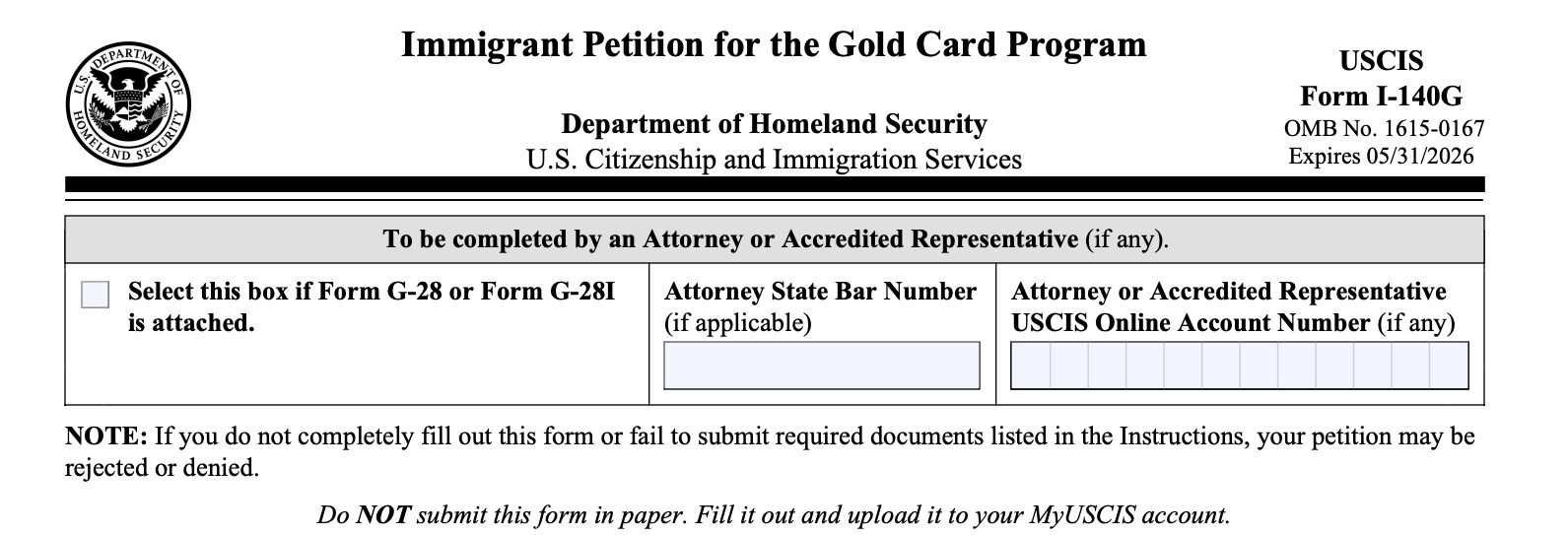
¿Qué es el Formulario I-140G?
El Formulario I-140G es la nueva petición inmigrante para las personas que buscan la residencia permanente a través del programa Gold Card, una visa basada en el empleo que requiere una donación financiera al Departamento de Comercio de los Estados Unidos y prueba de capacidad extraordinaria o excepcional.
Una vez que su petición I-140G sea aprobada y un número de visa de inmigrante esté disponible, completará tramitación consular a través del Departamento de Estado de los Estados Unidos. Después de que se emita su visa, puede viajar a los Estados Unidos y ser admitido como residente permanente legal.
Descargo de responsabilidad: El programa Gold Card es completamente nuevo y varios aspectos clave de su implementación siguen sin estar claros. USCIS aún no ha emitido una guía completa sobre cómo se evaluarán las peticiones Además, debido a que el programa fue creado a través de una orden ejecutiva, podría enfrentar desafíos legales que puedan afectar su implementación o viabilidad continua. Boundless actualizará esta guía a medida que haya más información disponible.
¿Quién puede presentar el Formulario I-140G?
El programa Gold Card solo está disponible a través de dos existentes visa de inmigrante basada en el empleo clasificaciones. Al presentar el Formulario I-140G, debe seleccionar uno de los siguientes en el formulario:
- Habilidad extraordinaria (EB-1A), o
- Capacidad excepcional con una exención de interés nacional (EB-2 AHORA)
En esta etapa, el gobierno aún no ha establecido claramente si los solicitantes de la Tarjeta Oro deben presentar pruebas completas, tradicionales EB-1A o EB-2 NIW, o si la donación financiera requerida por sí sola podría ser suficiente una vez que se selecciona una clasificación. Hasta que USCIS emita una guía más detallada, los solicitantes deben esperar que sus antecedentes profesionales y logros sean revisados en relación con una de estas dos categorías, incluso si los requisitos de evidencia aún no están claros.
¿Necesita orientación sobre las opciones de visa basadas en el empleo? Boundless ayuda a las empresas y a las personas a navegar por las vías de NIW O-1, EB-1A y EB-2 a medida que se inician nuevos programas. Obtenga más información hoy.
Requisitos de elegibilidad para la tarjeta de oro
Para calificar para el programa Gold Card, los peticionarios deben mostrar:
1. Requerimientos Basados en la Capacidad
Debe cumplir con los criterios de habilidad extraordinaria (EB-1A) o habilidad excepcional (EB-2 NIW). El Servicio de Ciudadanía e Inmigración de los Estados Unidos (USCIS, por sus siglas en inglés) revisará su evidencia para determinar si califica para una de estas clasificaciones.
2. Regalo Financiero Requerido
Debe demostrar que ha obtenido legalmente fondos para hacer la donación requerida al Departamento de Comercio de los Estados Unidos:
- Autopeticionarios individuales:
- $1 millón por persona, incluyendo cónyuge e hijos que soliciten Tarjetas de Oro.
- La empresa presenta una solicitud para un empleado:
- $2 millones para el beneficiario principal, más
- $1 millón por dependiente (cónyuge o hijos) solicitando Tarjetas de Oro.
Estos fondos deben estar sin restricciones y disponibles para su transferencia una vez que USCIS apruebe la petición.
3. Presentación y firma adecuadas
- La petición deberá estar firmada electrónicamente por el peticionario o signatario corporativo autorizado.
- Las peticiones no firmadas o firmadas indebidamente serán rechazadas.
4. Evidencia Requerida
Debe presentar todos los documentos justificativos solicitados al presentar la solicitud. USCIS puede solicitar documentos originales más adelante, pero usted debe enviar copias a menos que se le indique lo contrario.
5. Traducciones
Cualquier documento en un idioma extranjero debe incluir un traducción completa al Inglés con certificación de traductor.
6. Biometría
USCIS puede requerir un biometría cita para verificaciones de antecedentes. La falta de asistencia puede dar lugar a una denegación.
Costo del Formulario I-140G
La solicitud a través del programa Gold Card implica dos costos separados:
1. Cuota de presentación de USCIS
- $15,000 por persona
Esta cuota se paga al presentar el Formulario I-140G. No es reembolsable, independientemente de la decisión o cuánto tiempo lleve el caso.
2. Obsequio financiero requerido para el Departamento de Comercio de los Estados Unidos
Este pago es no parte de la tasa de presentación. Es un requisito separado del programa de la Tarjeta Oro, y los peticionarios deben demostrar que han obtenido legalmente fondos para hacer el regalo después de que se apruebe la petición.
- Si presenta la solicitud como individuo (autopetición):
- $1 millón por persona, incluyendo el solicitante principal, cónyuge y cada hijo que solicite una Tarjeta Oro.
- Si presenta la solicitud como una corporación o entidad similar en nombre de una persona:
- $2 millones para el beneficiario principal, más
- $1 millón por dependiente (cónyuge o hijos) solicitando una Tarjeta Oro.
USCIS requiere prueba de fondos legales suficientes en el momento de la presentación, pero el regalo en sí se hace después aprobación.
¿Cuánto tiempo tarda en procesarse el Formulario I-140G?
Debido a que este es un programa recién creado, USCIS aún no ha publicado tiempos de procesamiento estándar. Los primeros solicitantes deben esperar:
- Comprobación inicial de integridad
- Posible Solicitudes de pruebas (RFE)
- Posible entrevista de USCIS
- Boletín de Visas tiempo de espera basado en la categoría de preferencia (EB-1A frente a EB-2 NIW)
Después de la aprobación y la disponibilidad de la visa, los solicitantes completan tramitación consular, que suele tardar varios meses.
Boundless actualizará esta línea de tiempo a medida que USCIS libere más datos.
Cómo solicitar la Tarjeta Oro (Formulario I-140G)
Paso 1: Reunir evidencia
Recopile documentación que muestre:
- Habilidad extraordinaria o excepcional
- Prueba de fondos legales para la donación requerida
- 20 años de historia laboral
- Cualquier cargo gubernamental o militar ocupado
- Para los solicitantes del NIW: un no certificado ETA-9089
Paso 2: Cree o Inicie sesión en su cuenta en línea de USCIS
Debe presentar el Formulario I-140G electrónicamente. Solo los solicitantes con números de recibo que comiencen por la OIE tendrán un número de cuenta en línea, pero no es necesario tenerlo.
Paso 3: Complete el formulario I-140G
Proporcione detalles sobre:
- Peticionante (individual o corporativo)
- Beneficiario principal
- Dependientes que solicitan Tarjetas de Oro
- Historial de registros de empleo e inmigración
- Firmas requeridas
- Certificación de intérprete o preparador, si se utiliza
Paso 4: Pague la tasa de presentación
Presentar el $15,000 por persona tarifa electrónica.
Paso 5: Asistir a Biometría (si es necesario)
USCIS emitirá un aviso de cita si se necesitan biometría.
Paso 6: Responder a cualquier solicitud de evidencia
USCIS puede solicitar más información o documentos originales.
Paso 7: Recibir la decisión de USCIS
USCIS le notificará electrónicamente y por correo.
Paso 8: Completar el procesamiento consular
Una vez que la visa esté disponible:
- Presentar los formularios requeridos al Departamento de Estado de los Estados Unidos
- Asistir a una entrevista consular
- Recibe tu visa de inmigrante
- Viajar a los Estados Unidos para convertirse en residente permanente
El programa Gold Card es nuevo, y aún se espera que USCIS dé a conocer una guía más detallada sobre cómo se evaluarán las peticiones. Si planea postularse, comience a reunir documentación con anticipación, especialmente comprobante de fondos legales, historial de empleo y evidencia relacionada con su clasificación elegida. Boundless continuará monitoreando las actualizaciones de USCIS y el Departamento de Estado para que tenga la información más precisa a medida que se desarrolla el programa.
{{cta-component-center-aligned}}
Formulario I-140G: Cómo solicitar el nuevo programa de tarjetas de oro de Trump
.svg)
Aviso legal: El programa Gold Card es completamente nuevo, y varios aspectos clave de su implementación siguen sin estar claros. USCIS aún no ha emitido una guía completa sobre cómo se evaluarán las peticiones, incluyendo si los solicitantes deben cumplir con los estándares probatorios tradicionales para las clasificaciones EB-1A o NIW. Además, debido a que el programa fue creado mediante una orden ejecutiva, podría enfrentar desafíos legales que afecten su implementación o viabilidad continua. Boundless actualizará esta guía a medida que haya más información disponible.
.svg)
Aviso legal: El programa Gold Card es completamente nuevo, y varios aspectos clave de su implementación siguen sin estar claros. USCIS aún no ha emitido una guía completa sobre cómo se evaluarán las peticiones, incluyendo si los solicitantes deben cumplir con los estándares probatorios tradicionales para las clasificaciones EB-1A o NIW. Además, debido a que el programa fue creado mediante una orden ejecutiva, podría enfrentar desafíos legales que afecten su implementación o viabilidad continua. Boundless actualizará esta guía a medida que haya más información disponible.
Aviso legal: El programa Gold Card es completamente nuevo, y varios aspectos clave de su implementación siguen sin estar claros. USCIS aún no ha emitido una guía completa sobre cómo se evaluarán las peticiones, incluyendo si los solicitantes deben cumplir con los estándares probatorios tradicionales para las clasificaciones EB-1A o NIW. Además, debido a que el programa fue creado mediante una orden ejecutiva, podría enfrentar desafíos legales que afecten su implementación o viabilidad continua. Boundless actualizará esta guía a medida que haya más información disponible.
¿Necesita ayuda para solicitar una visa?
Boundless ayuda a individuos, familias y empleadores a navegar por procesos complejos de visas e inmigración con orientación experta, desde elegir el tipo de visa correcto hasta presentar los formularios correctos y cumplir con los requisitos de viaje o trabajo.
Nuestro equipo simplifica cada paso para que puedas mudarte al extranjero con confianza y enfocarte en lo que viene después.
¿Necesita ayuda para solicitar una visa?
Boundless ayuda a individuos, familias y empleadores a navegar por procesos complejos de visas e inmigración con orientación experta, desde elegir el tipo de visa correcto hasta presentar los formularios correctos y cumplir con los requisitos de viaje o trabajo.
Nuestro equipo simplifica cada paso para que puedas mudarte al extranjero con confianza y enfocarte en lo que viene después.
Preguntas Frecuentes: Formulario I-140
Potencie su camino








Start your journey
Ponte en contacto con nosotros para obtener una demostración de Boundless y descubre cómo podemos ayudarte con tu estrategia para contratar talento internacional.
.svg)
.avif)