

H-1B Visa Extensions, Explained
.svg)
H-1B visas are typically granted for an initial period of three years, with the possibility of extension for up to six years. In this guide, we’ll cover how to file an H-1B visa extension and other important information to know about the extension process.
{{cta-component-horizontal-aligned}}
How to File an H-1B Visa Extension
Filing an H-1B visa extension involves several steps and requires careful attention to deadlines and documentation. Here’s a general overview of the process:
- Confirm Eligibility for Extension: Before beginning the extension process, ensure that you are eligible for an H-1B visa extension. Typically, H-1B visa holders are eligible for extensions beyond the initial three-year period, up to a maximum of six years, provided they continue to meet the requirements for the visa category. You can find more information on the six-year limit in the section below.
- File Early: Begin the extension process well in advance of the expiration date of your current H-1B visa. U.S. Citizenship and Immigration Services (USCIS) recommends filing the extension petition up to six months before the current visa expires.
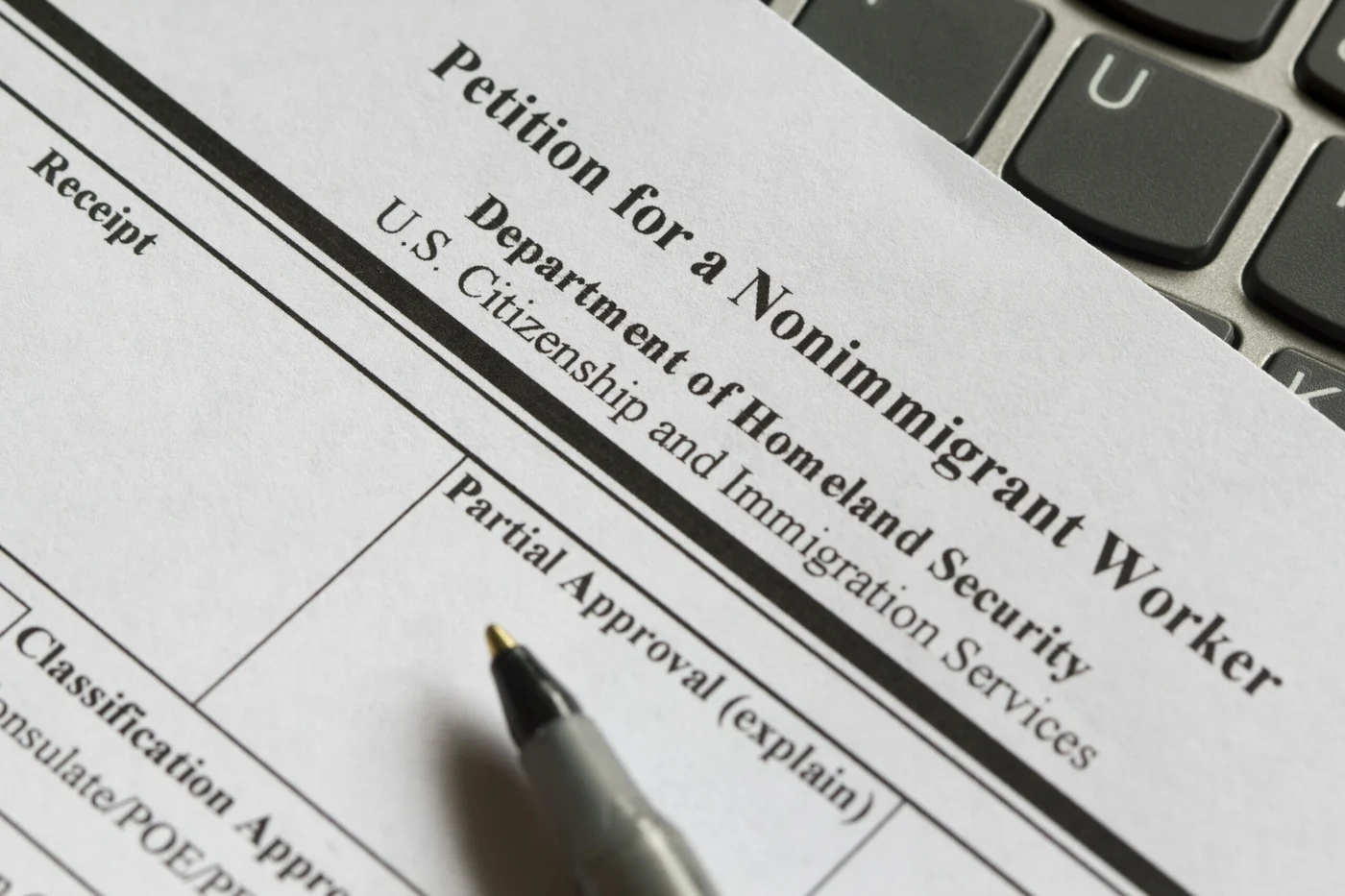
- Employer’s Role: The sponsoring employer is responsible for initiating the H-1B visa extension process. They must file Form I-129 (Petition for a Nonimmigrant Worker) with USCIS on behalf of the H-1B visa holder. The petition should include all required supporting documents and fees.
- Required Documents: The following documents are typically required for an H-1B visa extension:
- Form I-129 (Petition for a Nonimmigrant Worker)
- Copy of the H-1B visa holder’s current Form I-797 (Approval Notice)
- Updated employer letter confirming continued employment and detailing the terms of employment
- Documentation demonstrating the specialty occupation and the applicant’s qualifications (such as educational degrees, certifications, and work experience)
- Labor Condition Application (LCA) certified by the Department of Labor (DOL)
- Recent pay stubs and W-2 forms showing maintenance of H-1B status
- Current immigration history records, including the visa holder's most recent Form I-94 and any prior approval notices
- Submit the Petition: Once all required documents are gathered, the employer or their authorized representative should complete and submit Form I-129 along with the supporting documents to USCIS. Ensure that the correct filing fee is included with the petition (more on filing costs below).
- Wait for USCIS Decision: After submitting the petition, USCIS will review the application and make a decision.
- Receive Approval Notice: If the H-1B visa extension petition is approved, USCIS will issue an Approval Notice (Form I-797). This notice extends the beneficiary’s authorized stay in the U.S.
- Maintain Status: It’s essential for the H-1B visa holder to maintain lawful status while the extension petition is pending. This includes refraining from unauthorized employment or overstaying the expiration date of the current visa.
If the job duties, salary, or work location have changed since your last H-1B approval, an extension alone may not be enough. A material change to the role may require an amendment instead of, or in addition to, an extension. Learn more in Boundless's guide to H-1B amendments.
The 240-Day Work Authorization Rule
If USCIS receives a timely filed extension before the current H-1B period ends, the employee can generally continue working for the same employer for up to 240 days while the petition is pending, or until USCIS denies the case, whichever comes first. This only applies to a same-employer, same-classification filing — it doesn't cover a change of employer or a late filing.
{{tip-1}}
H-1B Extension Processing Time
The H-1B extension processing time currently averages between 1.5 months and 3 months. Processing times for H-1B visa extensions vary depending on the USCIS Service Center where the petition is filed. Be sure to check USCIS’ processing times tool for the latest H-1B extension processing time.
If your H-1B status is set to expire soon, it may be possible to speed up your extension with Premium Processing. Premium Processing guarantees a decision from USCIS within 15 calendar days, for an additional fee. Learn more about Premium Processing and how to apply in Boundless’ guide.
RELATED ARTICLES
H-1B Extension Cost
H-1B extensions typically have the same filing costs as initial H-1B applications. The sponsoring employer must pay $780 to file the Form I-129 extension petition.
Beyond the Form I-129 filing fee, extension costs can vary depending on the size of the company, whether or not Premium Processing is being requested, and whether or not the H-1B applicant is changing employers.
{{cta-component-center-aligned-1}}
Understanding the Six-Year Limit
U.S. immigration law sets a limit on how long a foreign worker can stay in the country under an H-1B visa. Generally speaking, H-1B visa holders are allowed to stay in the U.S. for a maximum of six years. Once this period is up, they must either go back to their home country for a specific duration or explore other visa options if they wish to stay in the United States.
Learn more about the H-1B six-year limit and potential strategies to extend your H-1B status past this period in Boundless’ guide.
Extending Beyond the Six-Year Limit (AC21)
The six-year limit is not absolute. Under the American Competitiveness in the Twenty-First Century Act (AC21), some H-1B workers who are in the green card process can extend their status beyond six years.
There are two main types of AC21 extensions:
One-year extensions are generally available when a qualifying labor certification (PERM) or Form I-140, Immigrant Petition for Alien Worker, has been pending for at least 365 days.
Three-year extensions are generally available when the worker has an approved Form I-140 but cannot yet apply to adjust status because an immigrant visa number is not currently available.
Which extension applies depends on where the worker is in the green card process, not just how close they are to the six-year mark. A worker in year five with no pending labor certification is in a very different position than a worker in year six with an approved I-140 and a backlogged priority date.
If you are approaching the six-year limit and have an employment-based green card case underway, it is worth reviewing AC21 eligibility well before your final extension is due.
Stateside Visa Renewal Pilot Program
The U.S. Department of State recently launched a pilot program that will allow H-1B visa holders to renew their status in the U.S., rather than have to travel to their home countries to secure visa stamps. NOTE: This is a separate process from H-1B extensions. Be sure to consult with your employer or immigration attorney to determine whether an extension or renewal is required for your H-1B status.
Stateside renewals are just a pilot program at this time, and the process has not been rolled out officially under U.S. immigration law. If implemented on a wider scale, the program could simplify the renewal process for H-1B visa holders and their employers.
You can learn more about the pilot program in Boundless’ guide.
{{cta-component-center-aligned-2}}
Related Information

.svg)
Boundless Tip
USCIS is rolling out new changes to improve the H-1B program. Learn more about what updates to expect here.
.svg)
Boundless Tip
USCIS is rolling out new changes to improve the H-1B program. Learn more about what updates to expect here.
Boundless Tip
USCIS is rolling out new changes to improve the H-1B program. Learn more about what updates to expect here.
Access our unified solutions online, anytime, anywhere.
Schedule a demo.
Boundless helps businesses build comprehensive immigration strategies.
Ready to cross immigration off your to do list?
Get in contact with us to get a demo of Boundless and see how we can help you with your strategy to hire international talent.
Access our unified solutions online, anytime, anywhere.
Schedule a demo.
Boundless helps businesses build comprehensive immigration strategies.
Ready to cross immigration off your to do list?
Get in contact with us to get a demo of Boundless and see how we can help you with your strategy to hire international talent.
H-1B Extension FAQs
Many H-1B visa holders choose to file for an extension up to 6 months before the expiration of their current H-1B visa. Early filing can help prevent potential lapses in your H-1B visa status and save you/your employer on additional Premium Processing costs.
No. H-1B visa holders filing for an extension of their status do not need to re-enter the H-1B visa lottery. Extensions are not subject to the H-1B visa cap.
Traveling outside the U.S. with a pending Form I-129 can pose a risk to your H-1B visa extension petition. If you need to travel outside of the country before your extension is approved, be sure to speak with your employer and consult an immigration attorney to determine the best path forward.
In many same-employer cases, yes. If your employer files your extension before your current H-1B period expires, you can generally continue working for that same employer for up to 240 days while the petition is pending, or until USCIS makes a decision, whichever comes first. This protection only applies if you are staying with the same employer in the same role. It does not apply if you are changing employers or if the extension was filed late.






.svg)
.avif)