

.svg)
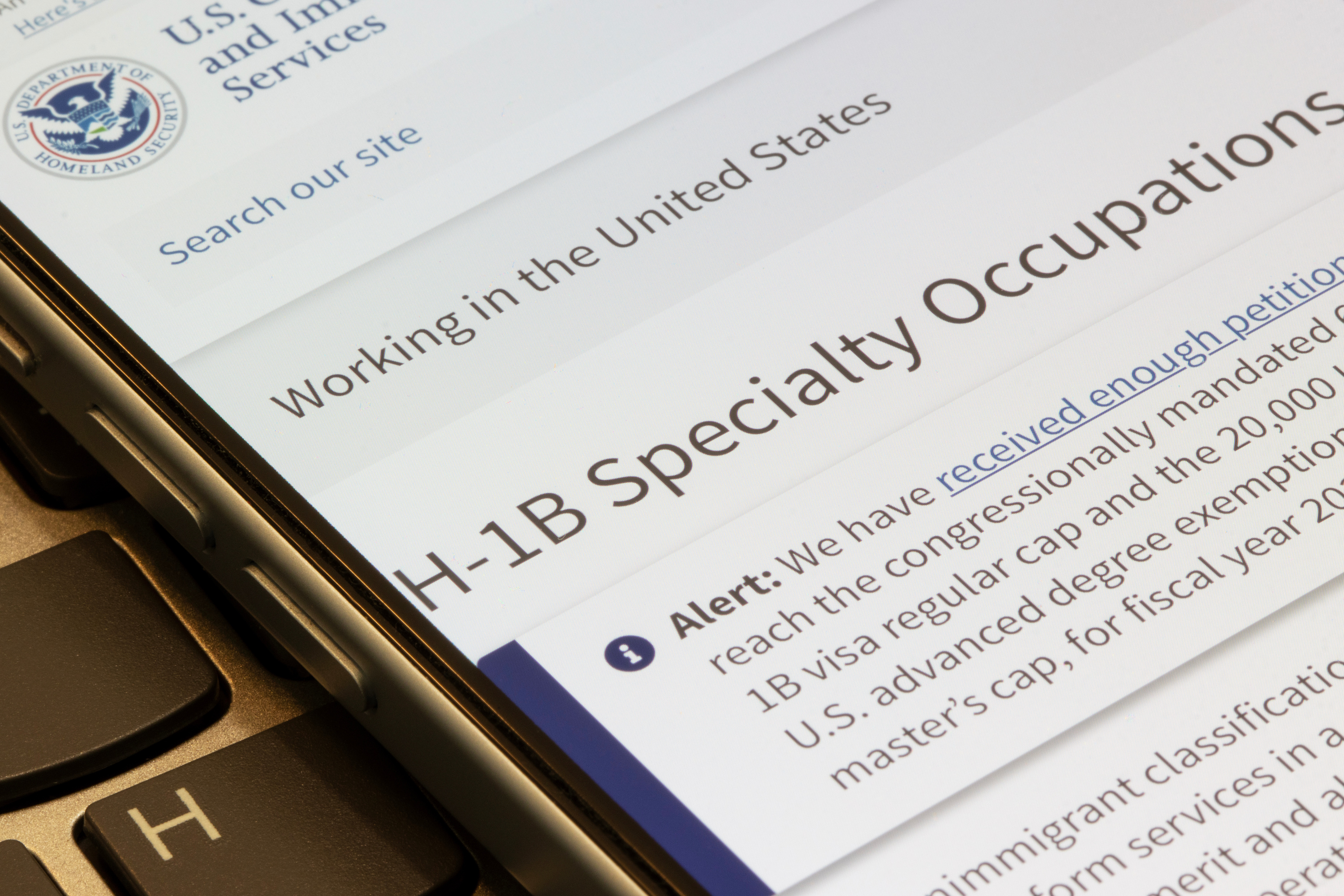
The Department of Homeland Security (DHS) has proposed a new $103,265 fee for H-1B cap-subject petitions, a significant increase in the cost employers could face when sponsoring workers through the annual H-1B cap.
The proposed fee would apply to all cap-subject H-1B petitions, including petitions for workers eligible for the U.S. advanced degree exemption. It would be charged when an employer files the H-1B petition with U.S. Citizenship and Immigration Services (USCIS), after a beneficiary has been selected through the H-1B registration process.
The fee is not yet in effect. DHS is expected to publish the proposed rule in the Federal Register on Aug. 25, 2026, followed by a 30-day public comment period.
What is the proposed H-1B fee?
Under the proposed rule, employers would pay an additional $103,265 for each cap-subject H-1B petition they file.
The fee would be separate from — and added to — other H-1B filing costs. DHS says it expects the fee to apply to approximately 85,000 cap-subject petitions annually, which would generate roughly $8.8 billion each year.
The proposal would not apply to H-1B petitions that are exempt from the annual cap, including certain petitions filed by institutions of higher education, affiliated nonprofits, nonprofit research organizations, and government research organizations. It also would not apply to other cap-exempt H-1B filings, such as many extensions and changes of employer for workers who have already been counted against the cap.
Is this the same as the $100,000 H-1B payment?
No. The proposed $103,265 fee is separate from the $100,000 H-1B payment established under a September 2025 presidential proclamation.
A federal district court vacated agency guidance implementing that $100,000 payment in June 2026. The federal government appealed the decision, and that appeal remains pending. The proclamation is scheduled to expire on Sept. 21, 2026, unless it is extended or renewed.
Why is DHS proposing such a large fee?
Unlike most USCIS filing fees, the proposed H-1B fee is not designed simply to cover the cost of processing an individual petition.
DHS says the revenue would help fund immigration-related activities across several federal agencies, including USCIS, U.S. Immigration and Customs Enforcement (ICE), U.S. Customs and Border Protection (CBP), the Executive Office for Immigration Review (EOIR), the Department of State, and the Department of Labor.
“The scope of this fee is unusual," said Boundless CEO Xiao Wang. "DHS is proposing to charge H-1B employers $103,265 to recover costs across the immigration system, far beyond the cost of adjudicating the H-1B petition itself.”
Of the roughly $8.8 billion DHS expects the fee to generate annually, approximately $3 billion would go toward USCIS costs and nearly $3 billion toward EOIR costs. Other funds would support ICE, CBP, the Department of State, and the Department of Labor.
DHS also argues that cap-subject H-1B employers are better positioned than other immigration applicants and petitioners to absorb higher fees. The agency acknowledges, however, that the proposal could cause some employers — particularly small businesses — to file fewer H-1B petitions.
What could the proposed fee mean for employers?
If finalized at $103,265, the fee would dramatically change the economics of sponsoring a new cap-subject H-1B worker.
DHS estimates that the rule would have a significant economic impact on 11,051 small entities, representing 76% of the small entities in its analysis that filed cap-subject petitions in fiscal year 2025.
The agency also expects the fee could reduce demand. DHS projects 85,000 cap-subject petition filings annually under the proposal, compared with an average of 108,910 cap-subject receipts in fiscal years 2024 and 2025.
For employers planning future H-1B sponsorship, the proposal adds another major potential cost to consider alongside other recent changes to the H-1B program.
“Employers have already spent the past year grappling with the prospect of a $100,000 H-1B payment," said Wang. "This proposal makes clear that six-figure H-1B costs may not be temporary. For startups and smaller companies especially, that could fundamentally change who can afford to compete for global talent.”
What happens next?
For now, nothing changes for H-1B filing fees as a result of this proposal.
The rule is scheduled to be published in the Federal Register on Aug. 25, 2026. Once published, the public will have 30 days to submit comments. DHS will then review those comments before deciding whether to issue a final rule.
The $103,265 fee would only become mandatory if DHS finalizes the proposal and the final rule takes effect. The amount and other details could change before then.
Employers considering H-1B sponsorship should continue planning under current requirements while keeping a close eye on the rulemaking process.
Boundless is monitoring the proposal and will provide updates as DHS moves through the rulemaking process.
.svg)
.png)
Planning for H-1B sponsorship?
Boundless can help your company understand how proposed immigration changes could affect your hiring strategy and prepare for what comes next.
Planning for H-1B sponsorship?
Boundless can help your company understand how proposed immigration changes could affect your hiring strategy and prepare for what comes next.

.png)




.svg)
.avif)